


From Reactive to Proactive: Designing a Mid-Stay Messaging Flow That Prevents Bad Reviews

Reputation Management
All Your Reviews In One Place
Track Reviews & Feedback, Collect More Reviews, Prevent Poor Reviews, Guest Feedback, Analytics & Reporting, Respond to Reviews with guestAI or with our Dedicated Team, Reviews Widget for Website, PMS Automations and more.
Book a Quick 15-minute Call for a Customized Setup. We personalize your trial by understanding your brand's unique goals during a quick call.
Guest Messaging Platform
Transform Guest Communication & Revenue with an All-in-One Platform
Seamless Guest Communication and Engagement: From Pre-arrival to Check-out
Book a Quick 15-minute Call for a Customized Setup. We personalize your trial by understanding your brand's unique goals during a quick call.
Review Responses
Done For You
Handcrafted, Personalized Responses to Your Online Reviews. Done for You.
Book a Quick 15-minute Call for a Customized Setup. We personalize your trial by understanding your brand's unique goals during a quick call.
Request Free Trial
Book a Quick 15-minute call
We personalize your trial by understanding your brand's unique goals during a quick call.
Most hotels assume a quiet stay is a happy stay — no calls to the front desk, no complaints at checkout, nothing to worry about. But silence isn't satisfaction. The guest who had a frustrating stay won't mention it at checkout — they'll mention it on Google, Booking.com, Expedia, or TripAdvisor. Wherever they booked, that's where they'll leave the review
A mid-stay messaging flow is how you reach that guest while you can still fix the problem.
This is a build guide. We won’t spend long on why in-stay feedback matters — if you want the strategic case, see our earlier piece on preventing negative reviews. Here, we’re going to design the actual sequence: when each message fires, what it says, who it routes to, and the rules that decide whether a AI or staff responds.
By the end you’ll have a flow you can map into your messaging platform this week.
The problem with the post-stay survey

Most hotels rely on the post-checkout email survey to catch problems. And it works — guests do fill them out, and the feedback is real. The problem isn't the data. It's the timing. By the time a guest tells you the shower pressure was poor or the AC ran cold all night, they've already checked out, already posted the review, and already moved on. You learn what went wrong. You just can't do anything about it.
Timing is the whole game. A flickering bathroom light is a 90-second maintenance ticket on day one of a three-night stay. The same light, discovered in a post-stay survey, a paragraph in a review that future guests will get influenced for years.. The window to recover a guest closes at checkout — after that, the only place left to process the frustration is a public review page
Industry research on service recovery is consistent on this point: resolving an issue while the guest is still on the property is what turns a would-be detractor into a promoter, and it is also the moment when negative word-of-mouth is most preventable.
There’s a behavioral wrinkle worth naming, too. Most guests won’t call the front desk over small irritations — the slow Wi-Fi, the late housekeeping, the AC that runs cold. These “micro-frustrations” feel too minor to complain about in person but accumulate into a mediocre overall impression. These guests are what we call friction carriers — they absorb small irritations and carry them all the way to the review page.
A well-timed message lowers the bar for them to tell you, because tapping a reply is easier than picking up the phone.
What a mid-stay flow actually is
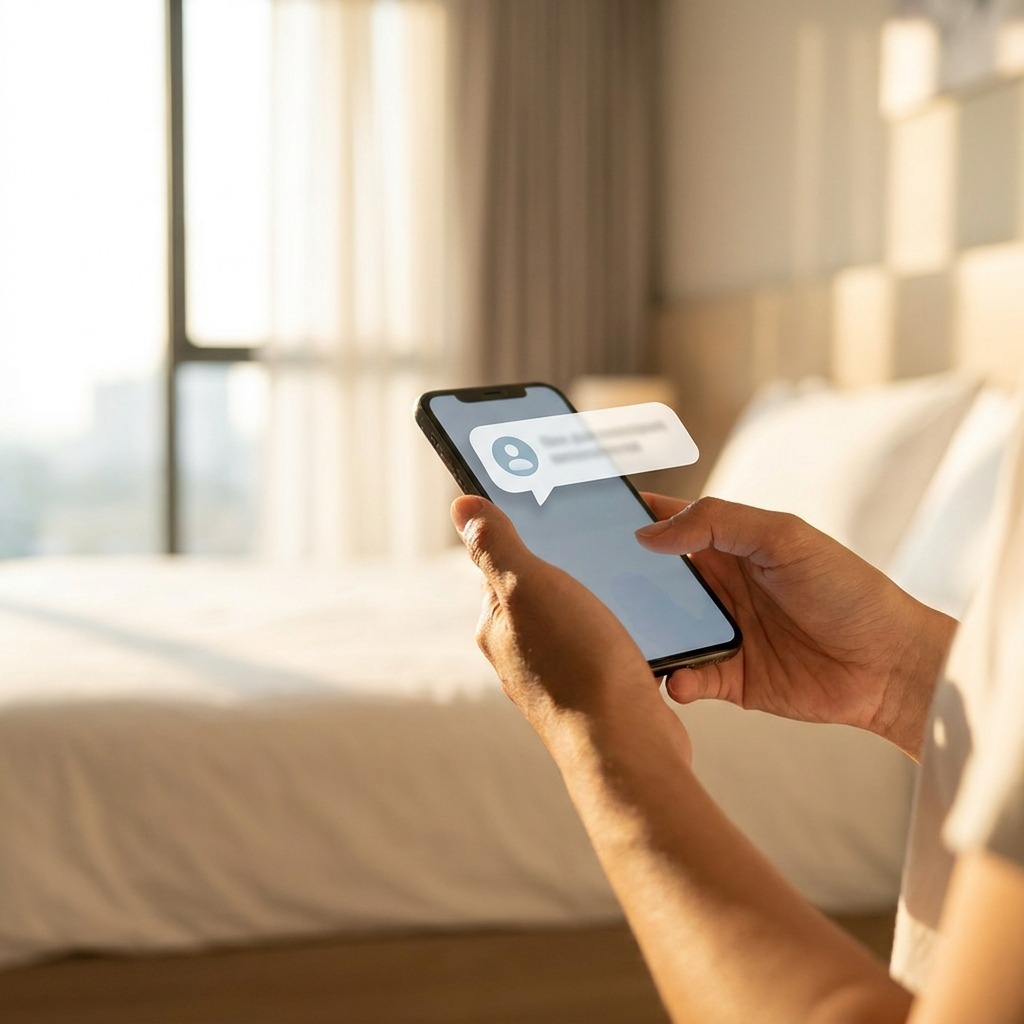
A mid-stay messaging flow is a short, automated sequence of one or two proactive check-ins sent during a guest’s stay, paired with clear rules for what happens based on how they respond. It has three jobs, in order of importance:
- Surface problems early — so you can fix them before checkout and before they reach a review site.
- Make the guest feel seen — a check-in signals attentiveness even when nothing is wrong.
- Open a service-recovery window — a negative reply is not a failure; it’s a chance to recover, which research shows can build more loyalty than a stay where nothing went wrong at all.
Crucially, this is not the same as your pre-arrival or upsell automations. Those are about logistics and add-on revenues. The mid-stay flow has one job: catch friction while it’s still fixable. Keep it that way — don’t bolt a spa promo onto your “How’s your stay?” message, or you’ll teach guests to ignore it and dilute the overall messaging experience.
The timing logic: when to send
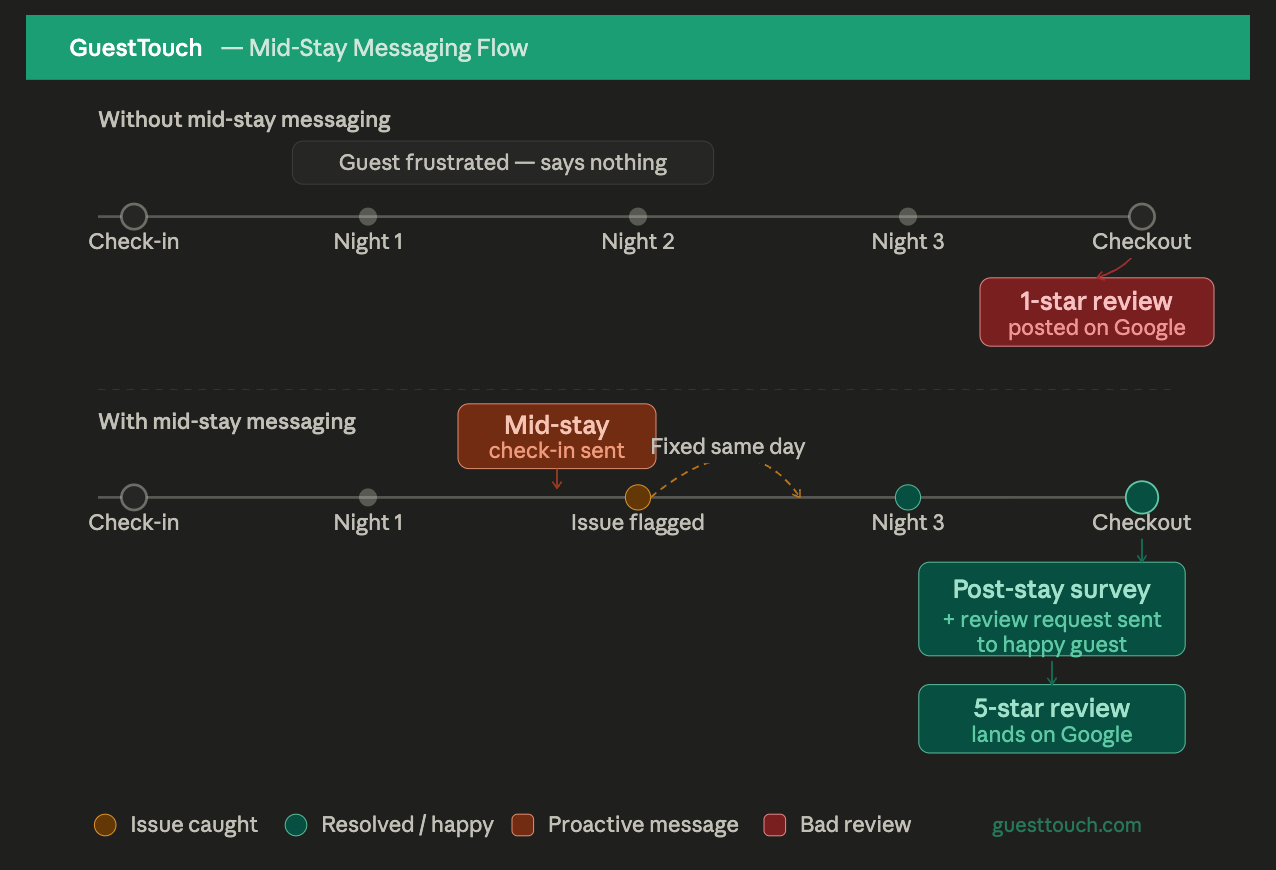
Send too early and the guest hasn’t experienced enough to have an opinion. Send too late and you’ve lost the window to fix anything. The right moment depends on length of stay, so anchor your triggers to nights booked rather than a fixed clock.
The messages: a copy-and-adapt sequence
The best mid-stay messages don't feel like feedback requests — they feel like good hospitality. Keep each one short, human, holistic to their stay and genuinely useful to the guest in that moment. One question, one easy reply, one door left open.
Message A — The on-arrival
Send this soon after check-in, while there's still the time to act on anything raised.
Hi [First name], it's [Name] from the front desk. The WiFi code is {{X}} — hope you've settled in well. Is everything in your room looking good? If there's anything we can do to make your stay better, just reply here and we'll be right on it. 👋 Enjoy your stay.
Why it works: guests don't want to be surveyed — they want a smooth stay. This message gives them something useful the moment they arrive, checks they're comfortable, and leaves the door open without any pressure. It feels like a thoughtful touch from the hotel, not a process.
Message B — The mid-stay pulse check
One question. Make replying effortless. If your platform supports quick-reply buttons or a simple scale, use them.
Hi [First name], it’s [Name] from [Hotel]. You’re halfway through your stay with us — how’s everything going so far? Just reply 1–5 (5 = great), or tell us if there’s anything we can sort out for you. 👋
Why it works: it names the guest, comes from a person rather than “the hotel,” and gives two equally easy paths — a number or a sentence. It explicitly invites problems (“anything we can sort out”) instead of fishing only for praise.
Message C — The positive-path follow-up
If a guest replies positively (a 4–5, or “all good!”), don’t leave them hanging. Acknowledge, and — only now — gently plant the seed for a review later. This is the one place a soft ask belongs, because you’ve confirmed they’re happy.
So glad to hear it, [First name]! If anything comes up before you head off, just message us here. Enjoy the rest of your stay 😊
Message D — The recovery path
If a guest signals a problem (a 1–3, or any complaint), speed and ownership are everything. The first reply should acknowledge, apologize without being defensive, and commit to a concrete next step with a timeframe.
Thank you for telling us, [First name] — I’m sorry about [issue]. I’m letting [team] know right now and we’ll have someone on it within [timeframe]. I’ll follow up personally to make sure it’s sorted.
Then close the loop. The single most common failure in service recovery is the message that promises action and never confirms it happened. Once the issue is resolved, send a short follow-up confirming the fix and, if appropriate, offering a small goodwill gesture (a drink at the bar, late checkout). A recovered guest who feels heard often leaves a better review than one who sailed through without incident.
The escalation rules: AI, route, or human
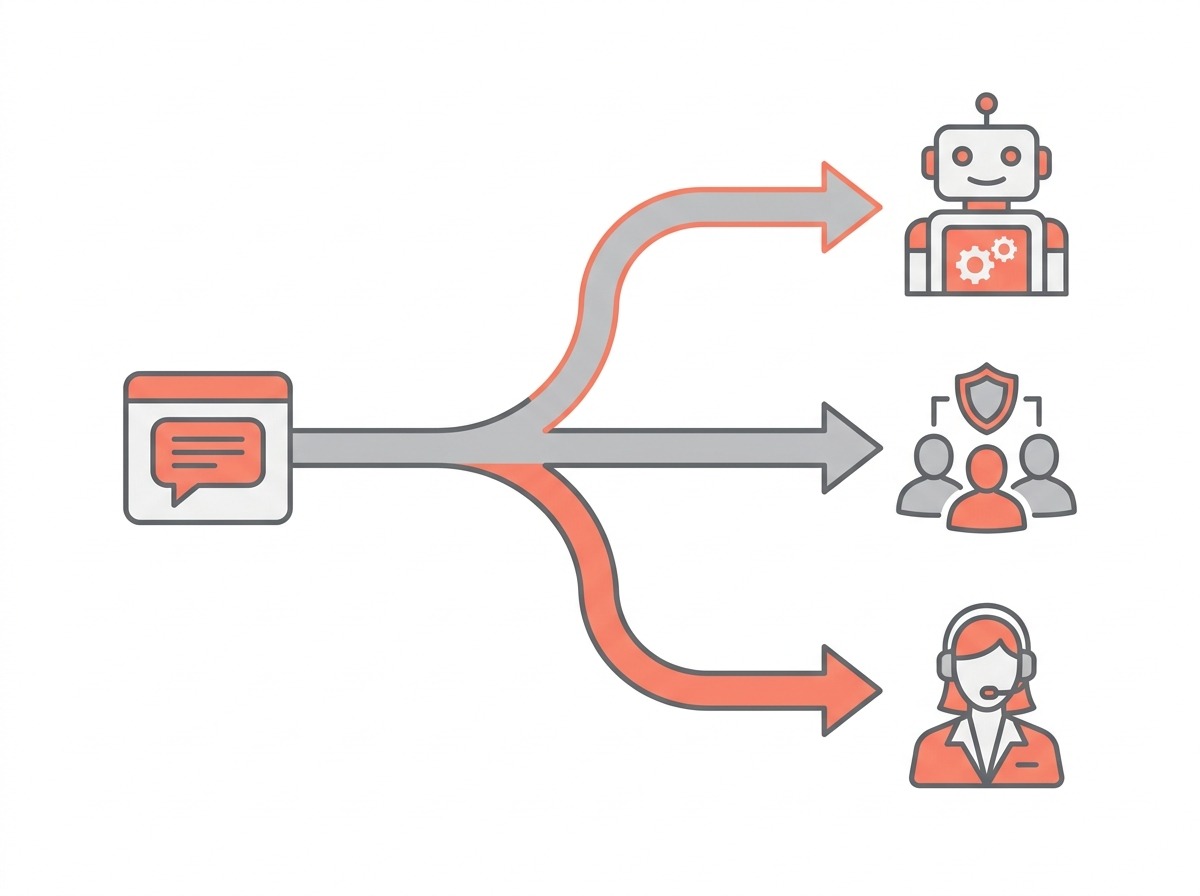
Automation sends the messages; it should not pretend to handle every reply. The flow needs explicit rules for when an automated acknowledgment is fine, when a message routes to a specific department, and when a human must take over immediately.
Decide these in advance — ambiguity is what makes messaging feel chaotic and slow.
The principle: let automation handle volume and speed, but the moment a reply carries emotion or risk, a person owns it. A guest who is already unhappy and then gets an obviously canned response is a guest writing a review in their head.
How to know it’s working

A mid-stay flow isn’t “set and forget.” Track a small number of signals and adjust:
- Mid-stay reply rate — if few guests respond, your timing or copy needs work.
- Issues caught before checkout — the metric that matters most; every one is a review you may have prevented.
- Time-to-resolution — how long between a flagged issue and a confirmed fix.
- Negative review volume over time — the lagging indicator the whole flow exists to move.
Watch the trend, not any single week. If reply rates sag, test a different send time before rewriting the message; timing usually matters more than wording.
Common pitfalls to avoid
- Turning the check-in into a survey. Mid-stay is one question, not five. Save the detailed survey for after checkout.
- Mixing in a sales pitch. An upsell stapled to “How’s your stay?” undermines the trust the message is meant to build.
- Promising action and going quiet. The follow-up confirming the fix is non-negotiable.
- Letting AI handle a complaint. Speed is good; a canned reply to a real frustration is worse than no reply.
- One message for every stay length. A one-night guest and a week-long guest need completely different timing.
Start with one message

You don’t need to build the whole system at once. Start with a single mid-stay pulse check for your two- and three-night guests, route any negative reply straight to a staff, and confirm every fix.
That alone will catch issues you currently only learn about from reviews. Refine the timing and add the second touch for longer stays once the basics are running.
The shift from reactive to proactive isn’t a technology upgrade — it’s a decision to ask before they tell the internet. The hotels that win on reputation aren’t the ones with zero problems. They’re the ones who find the problems first.
Want to put this flow on autopilot across WhatsApp and SMS? See how GuestTouch automates mid-stay messaging and service recovery.
GuestTouch specialists can work with your team to help build out your ideal workflow. Book a quick call for a quick chat. Or try GuestTouch: experience interactive demo


Need Help ?
Talk to our Experts to supercharge your Pre-Arrival experience
Schedule Now
Posted on
May 22, 2026
Referenced GuestTouch Products
AI generated responses for your reviews
Powered by Review Response AI

Get bright ideas and best practices delivered straight to your inbox
Stay up to date! Get all the latest & greatest posts delivered straight to your inbox
Don’t worry we won’t send you spam